 FHN
Several visits / week
For high-traffic offices, coworking spaces and regional head offices with shared toilets.
Open-plan offices, meeting rooms, washrooms, kitchenettes: a clean, healthy and pleasant environment, with optional digital reporting for site managers.
FHN Clean provides regular cleaning for your offices in Mons, Hainaut, Wallonia and Brussels. We work off-peak hours so as not to disrupt your business, with a clear checklist and before/after photos on request. Whether you are an SME, a notary’s office, a professional practice or a regional head office, we adapt the frequency, the areas covered and the level of finish to your day-to-day operations.
Save time: send us the floor area, the frequency you want and photos.
The quote form lets you upload images (current condition / access constraints), which speeds up the handling of your request.
📞 +32 65 22 92 44 · contact form
A structured method that delivers consistent, documented and repeatable results from one visit to the next.
Scope, floor areas, target frequency, working hours, access and keys.
Daily, weekly and monthly tasks, set out in a reference document.
Trained team, consistent method, products suited to each surface, touchpoints cleaned every time.
Checklist completed at every visit, visual inspection by the site supervisor.
WorkHubSpace: time-stamped visits, before/after photos, multi-site history available 24/7.
Adjustments for the season, events, busy periods and client feedback.
For high-traffic offices, coworking spaces and regional head offices with shared toilets.
The most common frequency for SMEs: one full visit, plus optional finishing tasks.
For small teams, mostly remote working, or to complement in-house cleaning.
FHN Clean provides office cleaning in Mons, throughout Hainaut (Charleroi, La Louvière, Tournai, Soignies, Binche, Ath), across Wallonia and in Brussels. For multi-site clients, we centralise reports through WorkHubSpace.
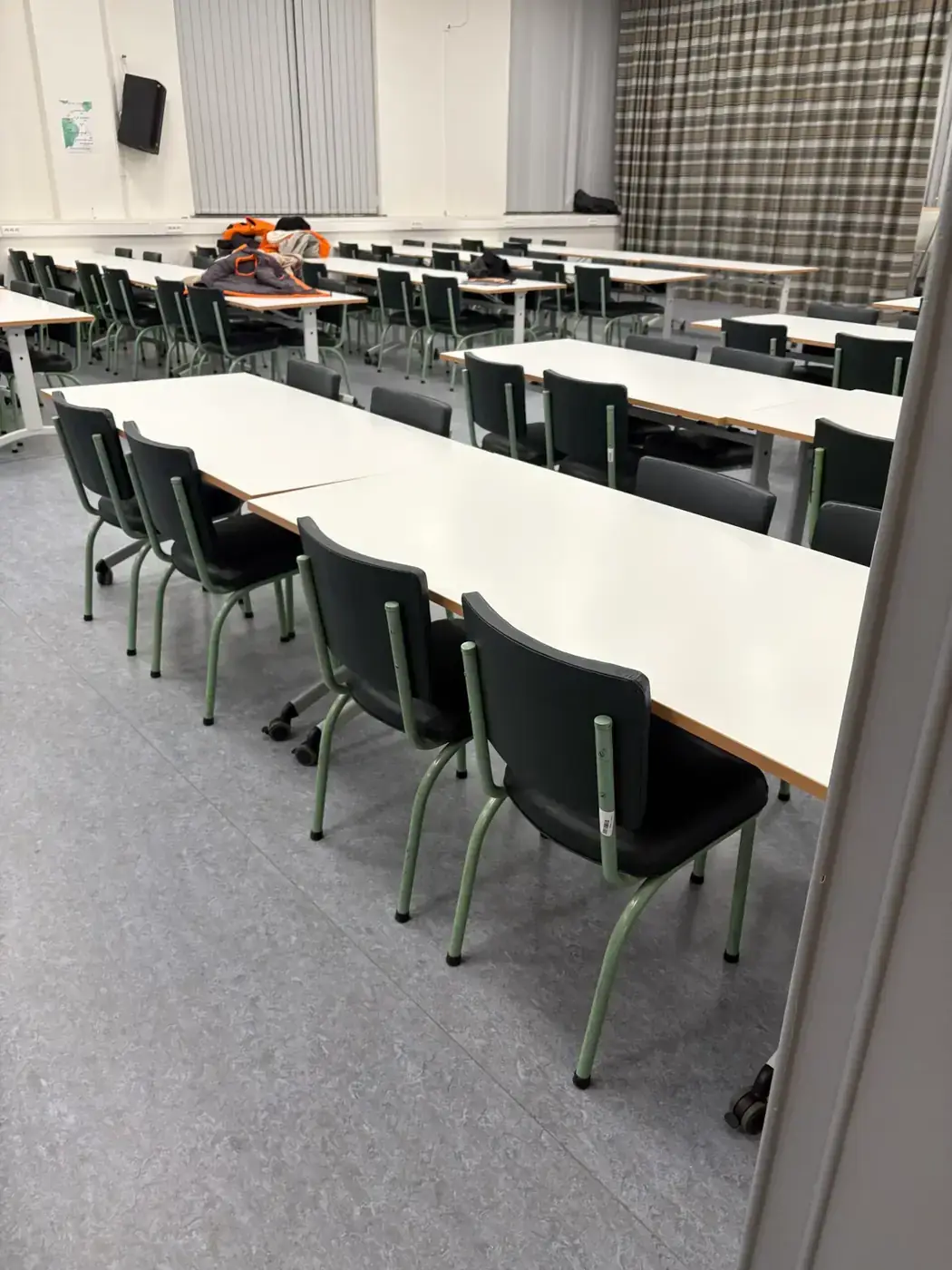
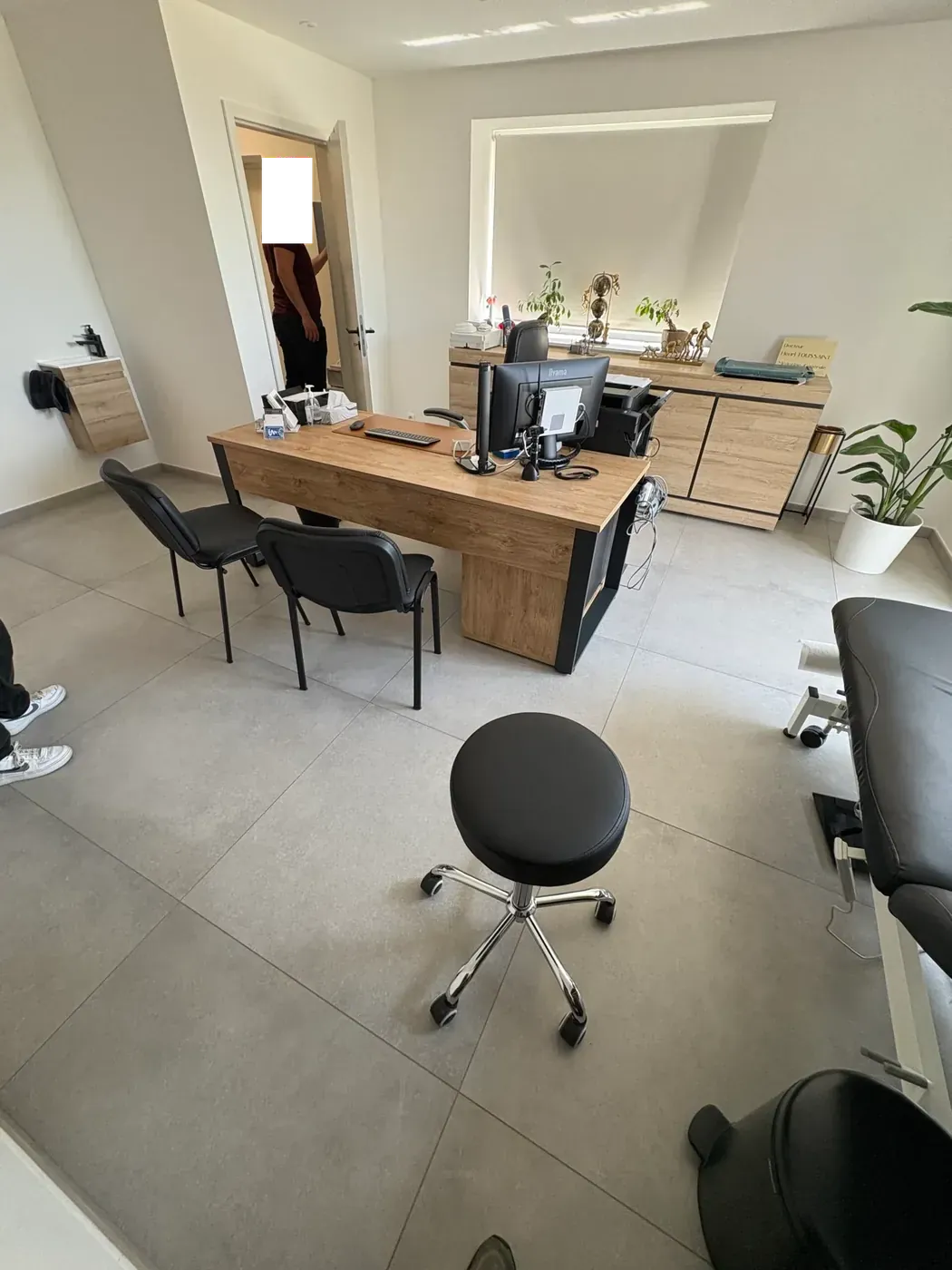
These FHN Clean photos show various offices after a clean: parquet, tiled floors, large spaces and occupied rooms. The protocol is adapted to the floor covering, the amount of traffic and the client’s instructions.
On-site photos supplied by FHN Clean. Click to enlarge.
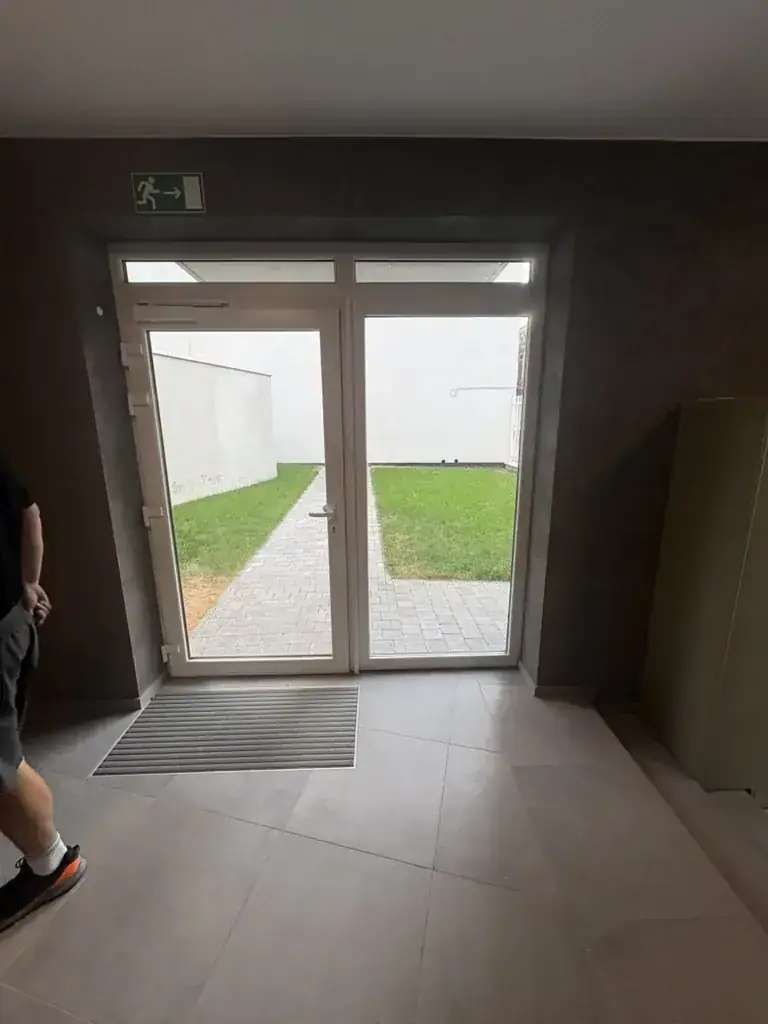
Entrance halls, stairwells, car parks, contracts for property managers (syndics).
View page →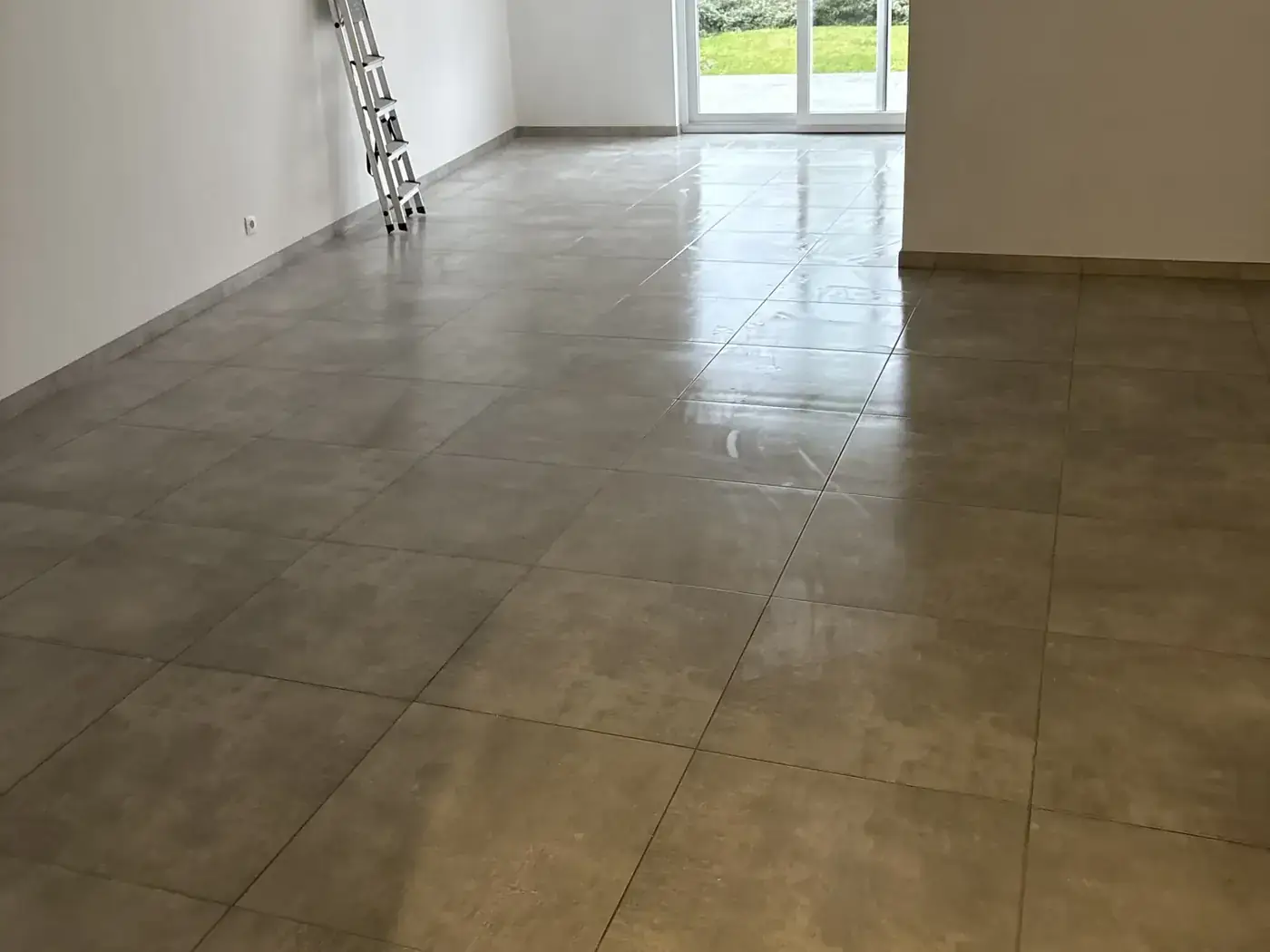
“Office cleaning” covers three different jobs. Here are the three we do, with the hours actually clocked.
For twelve months, we cleaned two police stations in a Hainaut police zone: the main station and a neighbourhood station. 384 visits, 1,457.8 hours clocked. The contract ended in July 2026.
What you learn there can’t be made up. A police station runs 24 hours a day: there is no time when the premises are empty. We clean around people without disturbing them, in rooms some of which can only be opened with an officer present. The cells, interview rooms and locker rooms each have their own protocol. And all staff go through a check before entering.
If you manage a site with controlled access — a clinic, laboratory, server room or government office — this is the kind of experience to ask for, not a number of square metres.
On a construction site in Woluwe-Saint-Lambert: 31 visits, 106 hours, from October 2025 to July 2026. Site management offices, canteen, changing rooms, toilets.
A site canteen is not a company kitchen: it’s forty people eating in thirty minutes, in boots caked in mud. The challenge isn’t the dirt, it’s the timing: we come between two sittings, or not at all.
For company offices, the question we are always asked is “how many times a week?”. Our answer, having measured it:
Both have their merits, and the choice matters.
When nobody is in: it’s quicker, we move the furniture, we use the scrubber-dryer. But nobody sees the work, and that’s how a contractor gets slack without anyone noticing for six months.
When staff are in: slower, but your teams see who comes by and can flag things on the spot. Our usual compromise: the heavy work outside hours, a visible visit during the day.
Either way, every visit we make is clocked, time-stamped and geolocated. You know who came, when, and for how long — without having to ask.
Water damage in your offices? The full case of an administrative building brought back into use in a single evening is set out on our flood clean-up page.
A cleaning contract that lasts rests on three decisions: the right frequency, a scope written down in black and white, and a way of checking that the work is done. Here is how we make them with our clients.
Frequency isn’t decided by square metres but by the number of people passing through. A 300 m² floor used by six people stays perfectly clean with one visit a week; the same floor with twenty-five people and a coffee machine needs three visits. It’s people who make the mess, not floor area.
| Situation | Frequency that works | What we add |
|---|---|---|
| Office with fewer than 10 people, low footfall | 1× / week | Interior windows 2× / year |
| 10 to 25 people, client visitors | 2 to 3× / week | Toilets at every visit |
| Open-plan office, shared kitchen | 5× / week | Kitchen and bins daily |
| Public reception, service counters | Daily + midday visit | Touchpoints 2× / day |
The most common mistake: cutting the frequency to bring the price down, then catching up with a quarterly “deep clean”. It doesn’t work. Limescale in the toilets, grease in the kitchenettes and ground-in dirt on floors cost more to strip back than to maintain. A narrower scope at the right frequency beats a broad scope that is poorly kept up.
A cleaning quote that just says “office cleaning” is a quote that will end in an argument. Ours names each room and, for each one, sets out what is done at every visit, what is done periodically and what is not included. Three questions to ask before signing, whoever the contractor is:
Door handles, light switches, lift buttons, handrails, shared keyboards. That’s where germs spread, and it’s what most often gets left out of the written scope.
Windows, descaling, floor stripping, high-level dusting, chairs. How often, and how is it billed — in the fixed price or separately?
Paper, soap, bags. Supplied or not, and restocked by whom? Run out of toilet paper on a Monday morning and it’s you they call.
You aren’t there when we work: most of our visits take place before 8:00 or after 18:00. That’s why every job leaves a time-stamped record — arrival time, departure time, site — and periodic tasks are photographed. You don’t have to take our word for it: you can see for yourself.
Our teams clock in on site, with a location check. If someone hasn’t turned up, it shows — to us too, and often before you have to report it.
We price after a site visit, not over the phone: it’s the only way to give a price we’ll stick to. The visit is free and without obligation.
Describe what you need in a few lines. We’ll reply within 24 working hours with a clear proposal.