 FHN
Twice weekly
For large co-owned buildings with heavy footfall: communal areas cleaned twice a week.
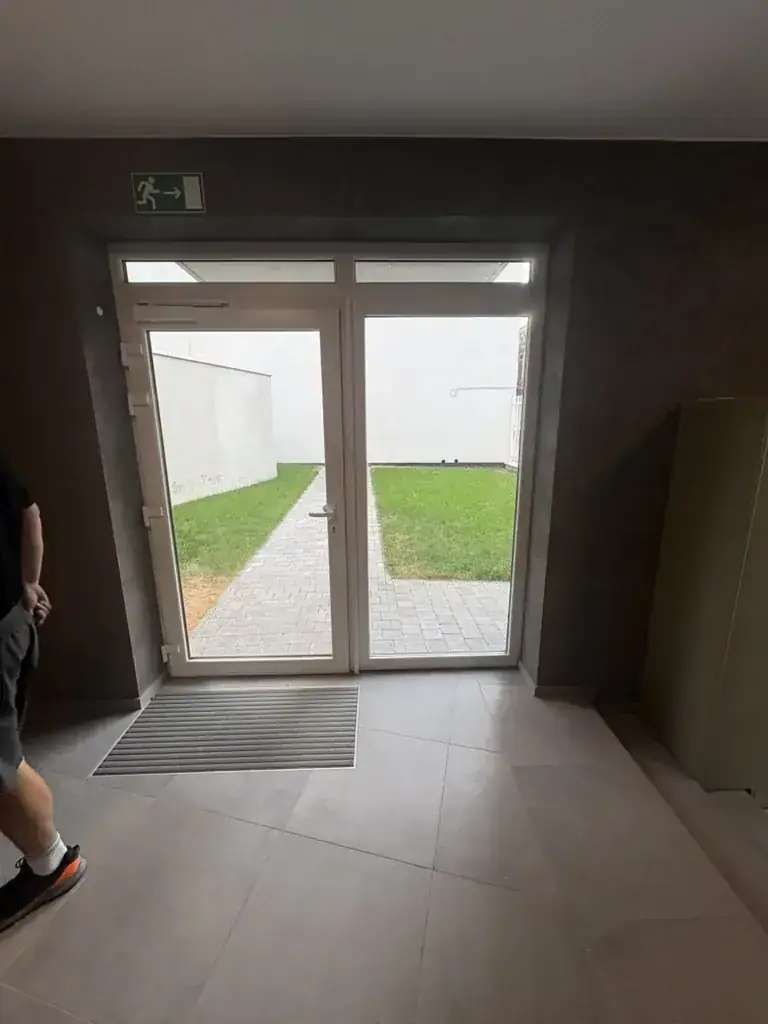
Entrance halls, stairs, lifts, landings, car parks and cellars: regular cleaning that reassures residents and co-owners, with every visit tracked.
Cleaning a building’s communal areas is a sensitive matter: residents see them every day, they shape how the property manager (syndic) is perceived, and they regularly lead to complaints at the general meeting. FHN Clean looks after entrance halls, stairs, lifts, landings, car parks, cellars and bin stores, with a clear cleaning schedule, written records and photos on request. We work regularly with professional property managers and owners’ associations in Mons, across Hainaut, in Brussels and in Wallonia.
Save time: send us the floor area, the frequency you want and photos.
The quote form lets you upload images (current condition / access constraints), which speeds up the handling of your request.
📞 +32 65 22 92 44 · contact form
A structured method that delivers consistent, documented and repeatable results from one visit to the next.
Mapping the areas, the current standard and known friction points (recurring complaints, difficult areas).
Frequency per area (weekly, twice weekly), schedule shared with residents.
Identifiable team, agreed time slot kept, suitable products (smear-free on lifts, marble floors).
Signed visit log, photos if something is flagged, alert to the property manager if there is a problem (damage, obstruction).
Concise monthly report, useful for the general meeting. WorkHubSpace available as an option for a digital history.
Schedule changed if needed: new tenants, building work, events (the festive season).
For large co-owned buildings with heavy footfall: communal areas cleaned twice a week.
Standard frequency for most buildings: one full clean a week.
Small buildings, light footfall, or as a complement to cleaning organised by the co-owners.
FHN Clean cleans communal areas in Mons and throughout Hainaut, as well as in Charleroi, La Louvière and Brussels. For property managers looking after several buildings, we offer a single point of contact and consolidated invoicing.
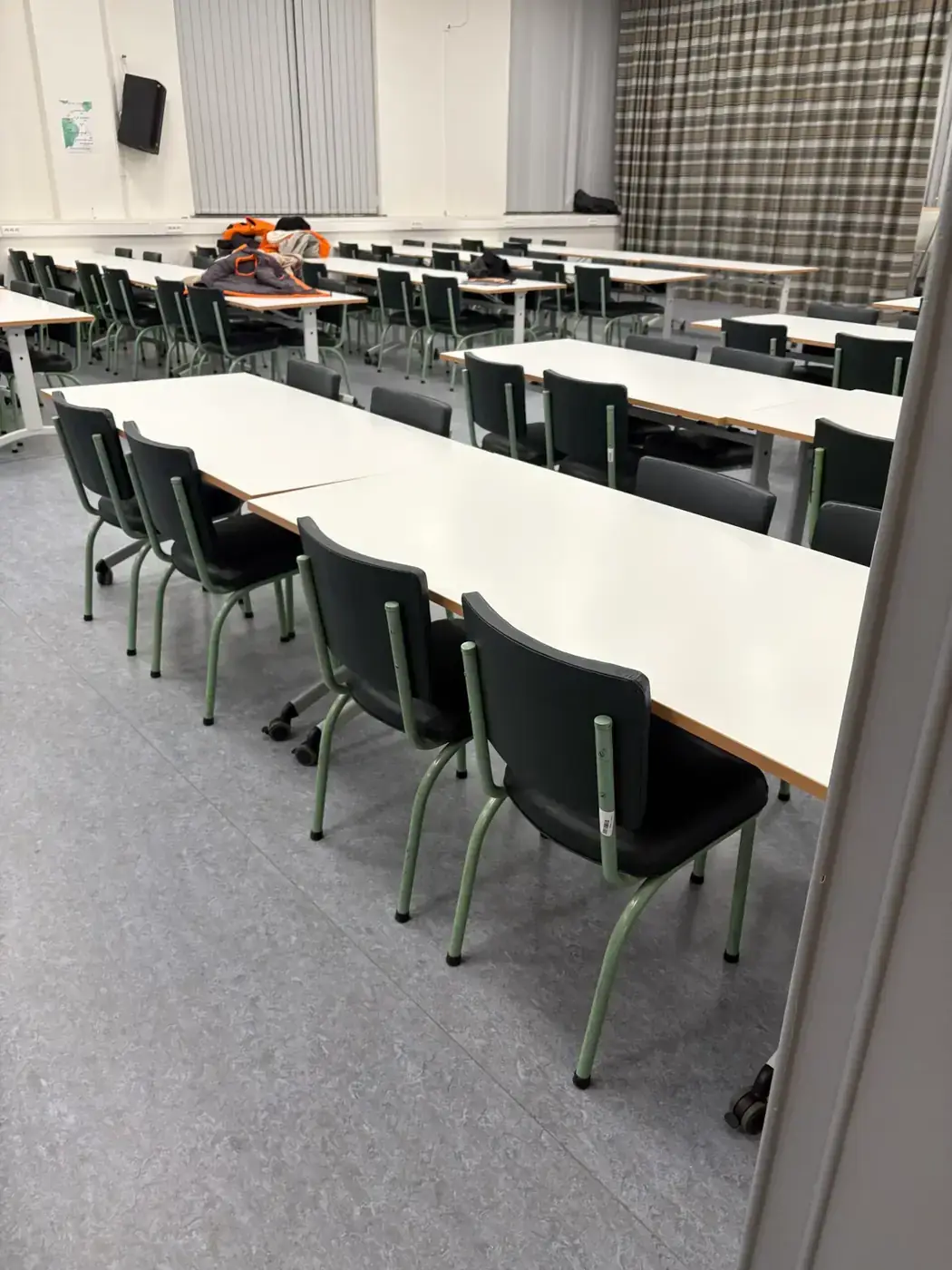
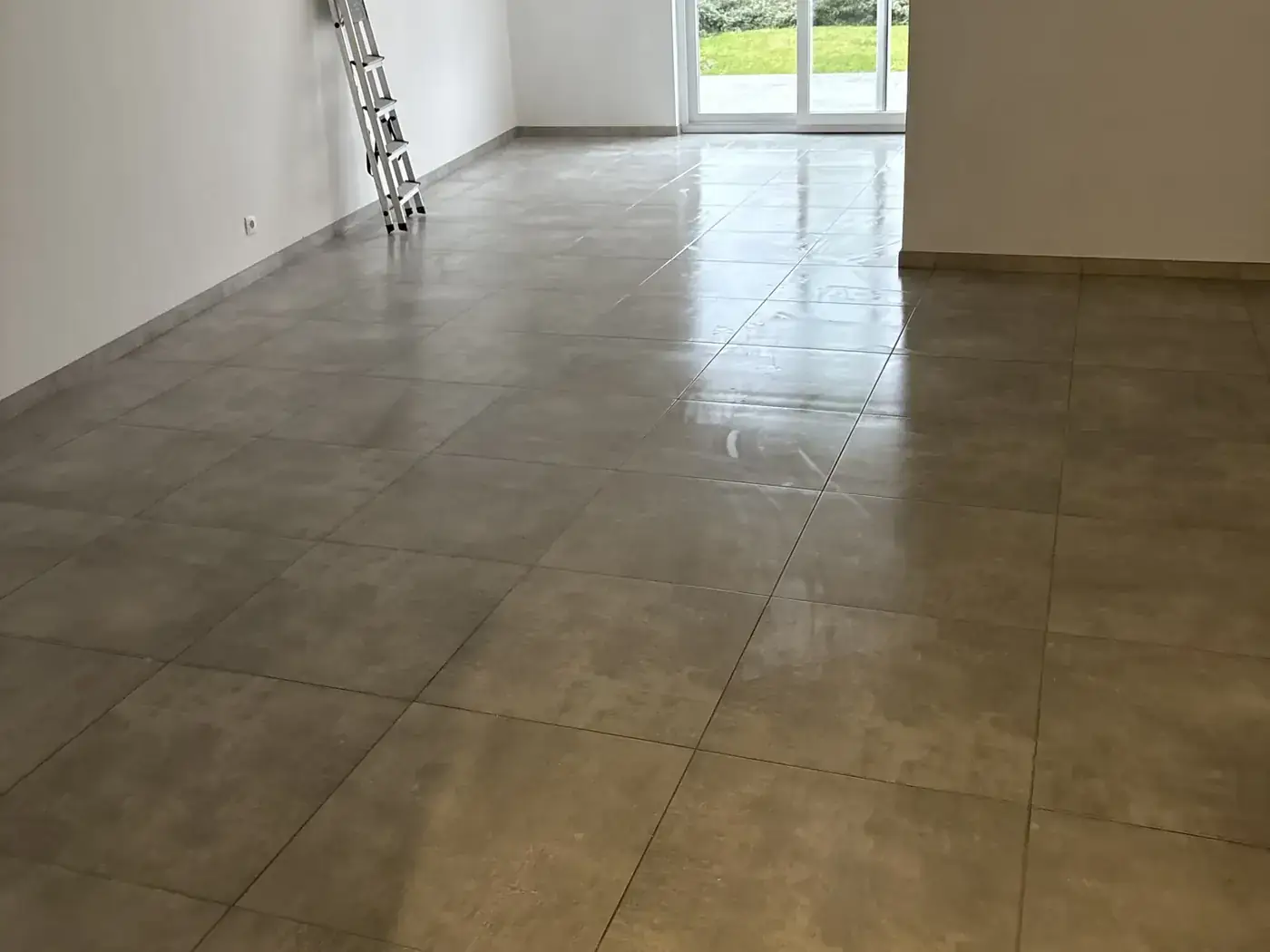
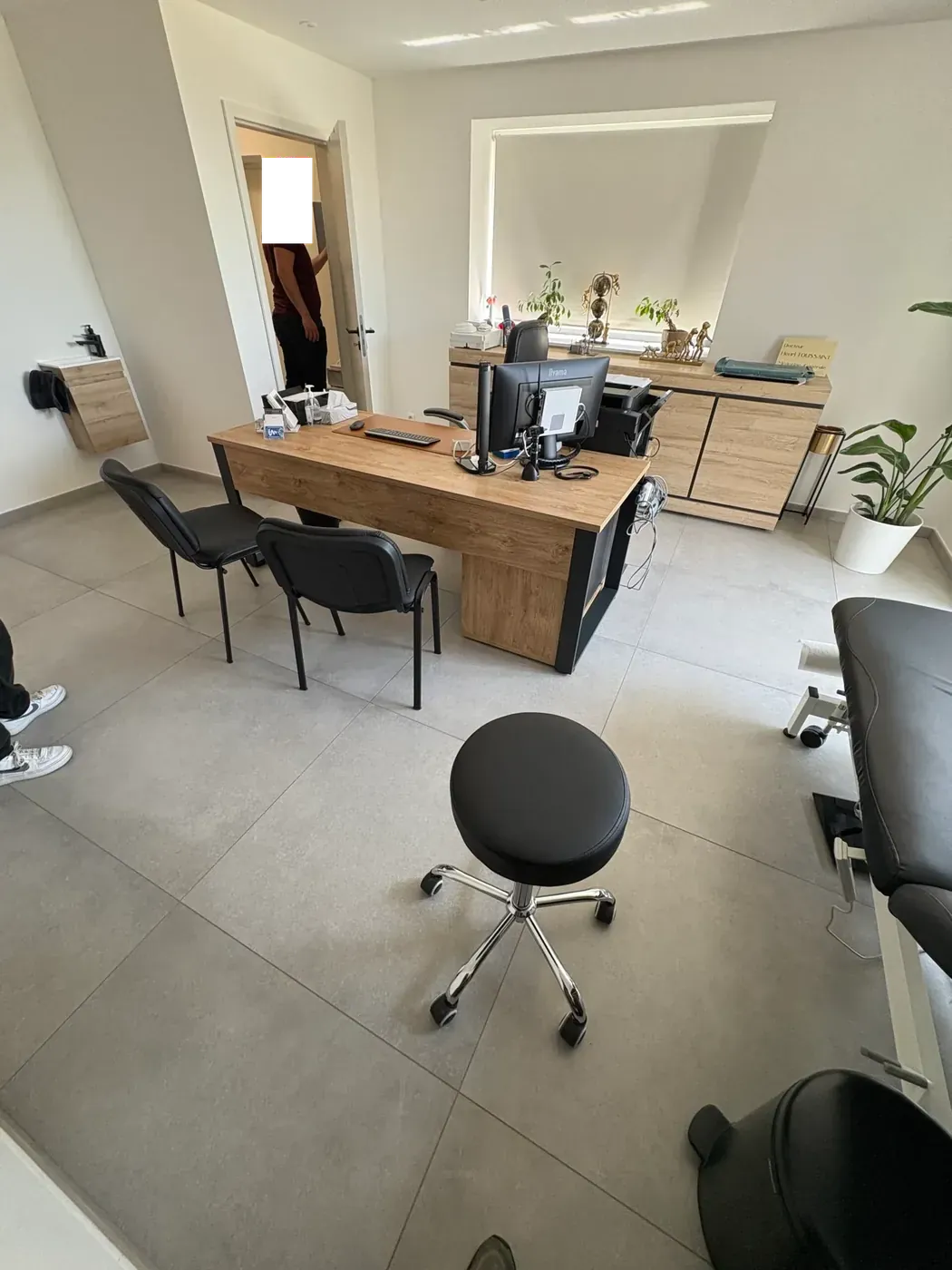
Since 30 December 2025, we have been cleaning the communal areas of a co-owned building in central Charleroi. 36 visits, 79.9 hours logged, and the contract is still running. It’s longevity, not a nice photo, that shows whether a contractor can last.
After thirty-six visits, you learn where the time goes. It’s never where you imagine when you sign.
Our answer, measured on our own contracts: frequency depends on the number of flats served by each stairwell, not on the number of floors. A stairwell serving twenty flats gets dirty twice as fast as two stairwells serving ten, because it’s footfall that brings the dirt.
In practice: weekly for a small co-owned building, twice a week once you go past twenty or so homes, and an extra visit in winter — mud and salt do more damage than the whole rest of the year.
We also clean student rooms (‘kots’) in Mons — including a residence of 126 units. The rhythm is nothing like an ordinary residential building: it’s quiet for nine months, and unmanageable at three specific moments — the start of the academic year, the exam revision period and the June move-outs. A fixed annual-fee contract that ignores these three peaks doesn’t hold up, and either the contractor or the residence pays the price.
That’s the real difficulty of a property manager’s job: an unhappy co-owner says ‘it’s never done’, and nobody can prove otherwise.
With us, every visit is logged, time-stamped and geolocated — the app checks that the person really is on site. The property manager can pull out the list of visits for the quarter and put it on the table. That settles the discussion in thirty seconds, one way or the other.
On request, we also provide a monthly report with time-stamped photos, and a checklist filled in on site at every visit.
We state it in the quote, in black and white. A contract that doesn’t say so saves you nothing: it sets you up for an argument.
Communal areas are the first complaint made against a property manager, and often the last item anyone dares to renegotiate. Here’s what separates a contract that lasts from one that gets cancelled after a year.
The term is convenient, and that’s exactly the problem: it says nothing. In a building with thirty units, the full scope can be up to three times the minimum scope. Put it in writing before comparing any prices:
Hall, letterboxes, stairwell floor, handrails and door handles, lift (floor, walls, buttons), the first steps of each flight, bin store.
Stairwell windows, light fittings, skirting boards, cellars and car park, flat front doors, immediate outside areas. The frequency is agreed — monthly, quarterly, twice a year.
The two classic omissions: the bin store and the stairwell windows. The first because it’s unpleasant, the second because it often needs a pole. Yet those are exactly the two that co-owners mention when they complain.
| Building | Usual frequency | Point to watch |
|---|---|---|
| Small co-owned building, 6 to 12 units | 1× / month to 1× / fortnight | Bin store often too small |
| Building with studios or student rooms | 1× / week | Turnover of occupants, bulky items |
| Residence with 20 to 60 units | 1 to 2× / week | Lift and hall at every visit |
| Mixed-use building, shops on the ground floor | 2 to 3× / week | Deliveries, boxes, entrance lobby |
An owners’ council doesn’t ask for reports: it wants to know whether someone came. Our teams clock in on site with a location check, and every visit leaves an arrival and departure time. You have the record, and you can present it at the general meeting without having to ask us for it.
For periodic jobs — windows, cellars, car park — we attach photos. That cuts short any argument six months later.
Describe what you need in a few lines. We’ll reply within 24 working hours with a clear proposal.