 FHN

Pumping & extraction
Removal of standing water: cellars, garages, ground floors, car parks and plant rooms.
Cellar, garage, shop or office floor under water: pumping, sludge removal, drying out and disinfection. You call, we answer straight away — and if we take the job, a team sets off that same day.
A flooded cellar is more than a puddle to clear. Water soaks into screeds and walls, sludge leaves a deposit that hardens, and water contaminated with sewage pollutes everything it touches. After a few hours, odours set in; after a few days, residual moisture attacks the materials and encourages mould.
That is why we send a team out the same day: pumping, sludge removal, monitored drying and disinfection. And because an insurance claim is also settled on paper, you come away with a time-stamped photo report for your insurer.
Removal of standing water: cellars, garages, ground floors, car parks and plant rooms.
Removal of sludge, silt, rubble and debris carried in by the flood or the backflow.
Professional dehumidifiers and air movers, with humidity levels monitored until everything is dry.
Enhanced protocol after waste water or sewage backflow: floors, walls, contact points.
Sorting, removal of anything beyond saving and disposal through the appropriate channels.
Time-stamped before/after photos and a detailed description of the work carried out.
You call, and within a few minutes we establish the essentials: water depth, area, source, access. If we take the job, a team sets off to you that same day; if not, we tell you straight away.
Water extraction, sludge removal, then installation of drying equipment. We monitor humidity levels until everything is completely dry.
Time-stamped before/after photos for your insurer, followed by a final clean and disinfection of the affected areas.
Only do this if you can without putting yourself at risk. If in doubt, don’t go in — wait for us.
If the fuse box is accessible and dry, switch off the electricity to the flooded area. Never step into water that is in contact with live installations.
Before moving anything: wide shots, water depth, damaged belongings. These images are the basis of your insurance claim.
Set damaged items aside rather than getting rid of them: the loss adjuster may want to see them. We sort through them with you when we arrive.
Photos taken during our call-outs. No two floods are alike: water can rise from the cellar, come through the ceiling or escape from a pipe. The method, however, does not change.
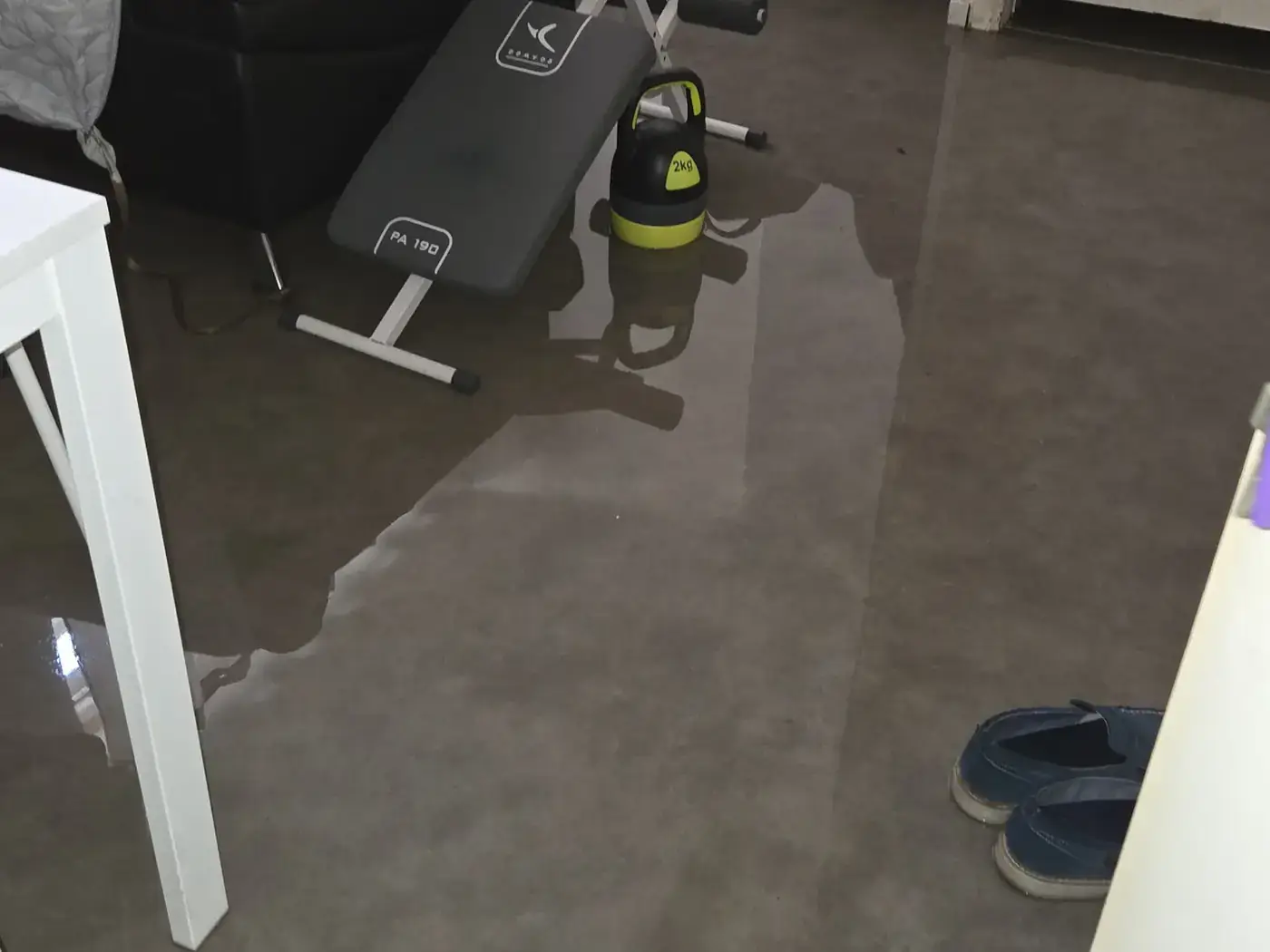
A concrete screed holds the water: it spreads, soaks into the skirting boards and reaches the neighbouring rooms.
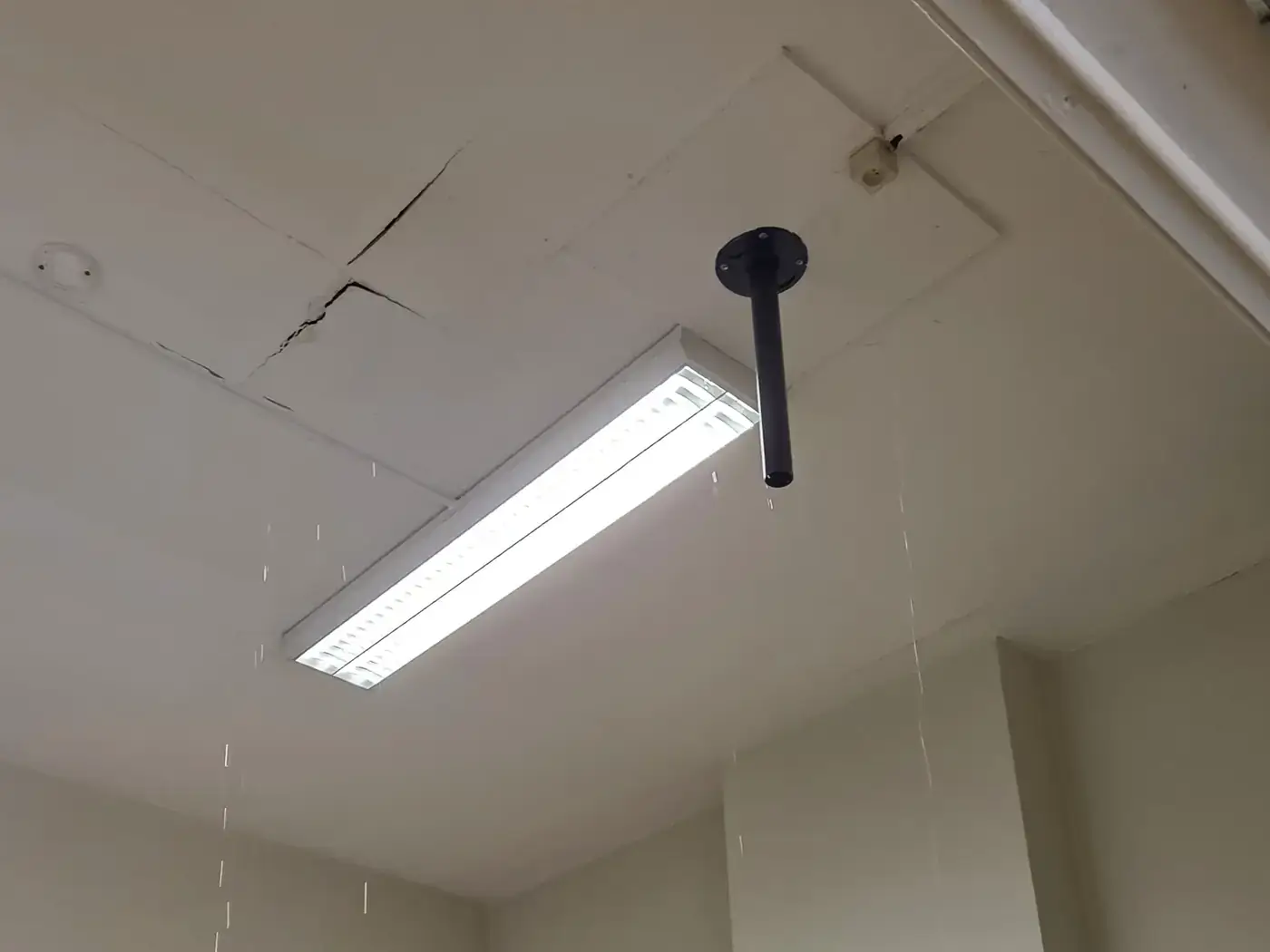
The water comes from above: it follows the cracks, runs along the light fittings and drops into the middle of the room.
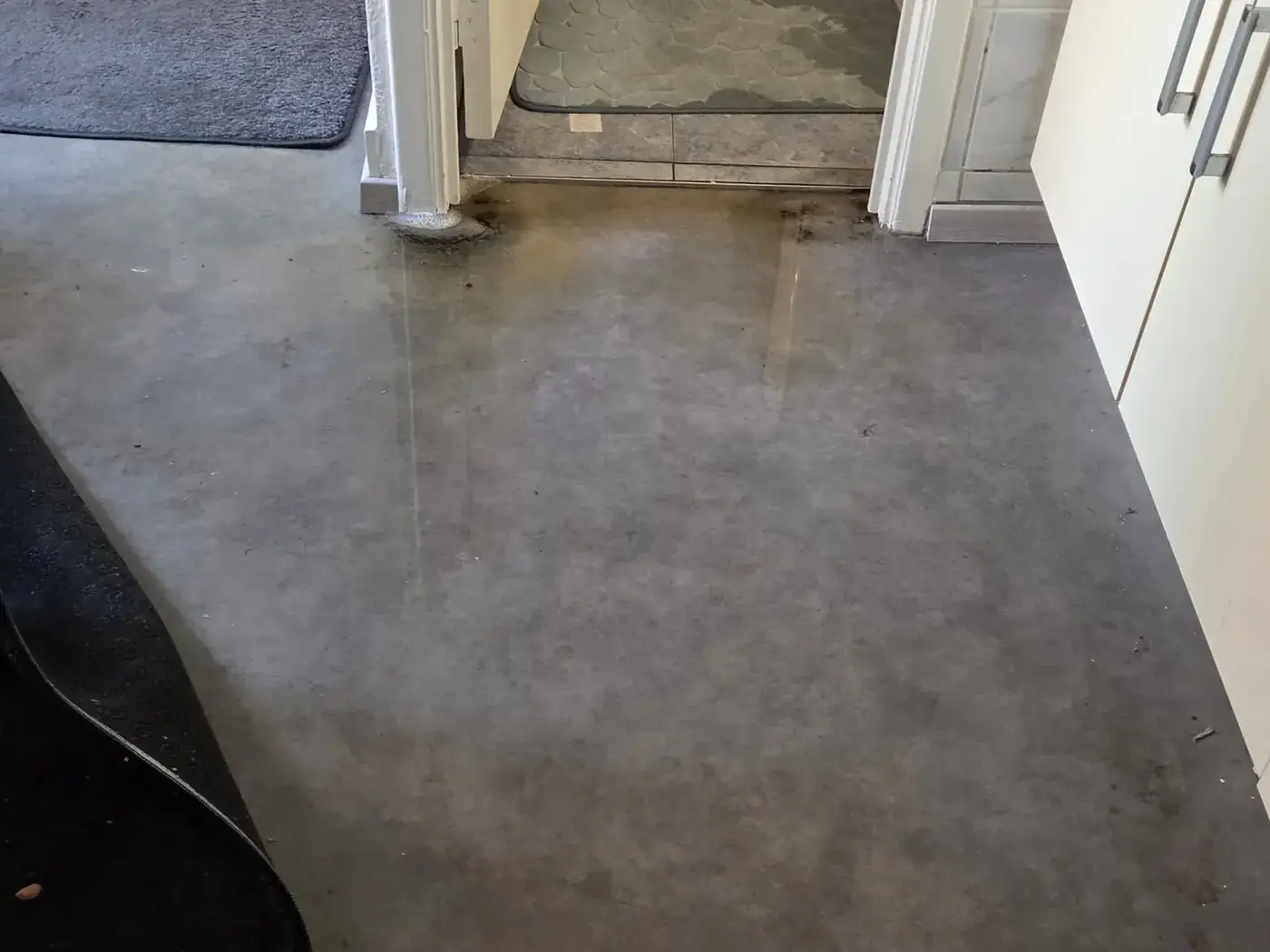
From the bathroom, the damage spreads into the hallway and the bedrooms. Rugs soak it up, thresholds turn black.
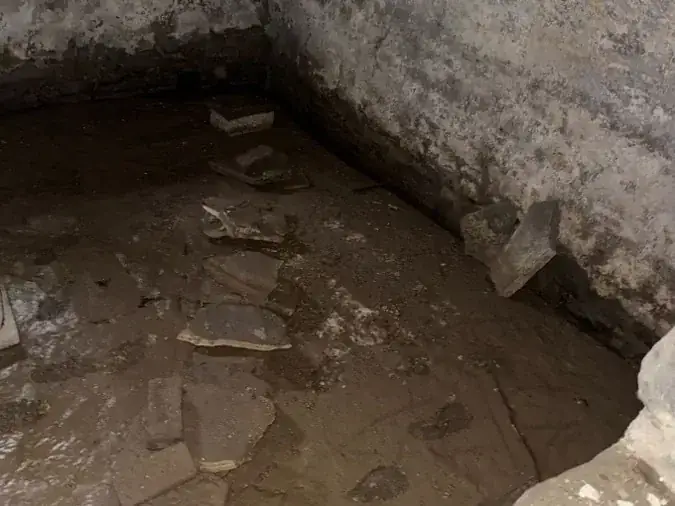
Once the water has gone down, the heaviest part remains: a layer of sludge that hardens and must be removed before drying can begin.
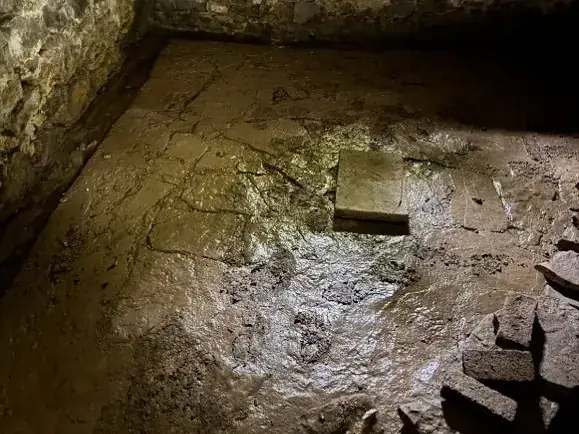
Soaked walls, a floor covered in deposits, loose tiles: restoration requires monitored drying.
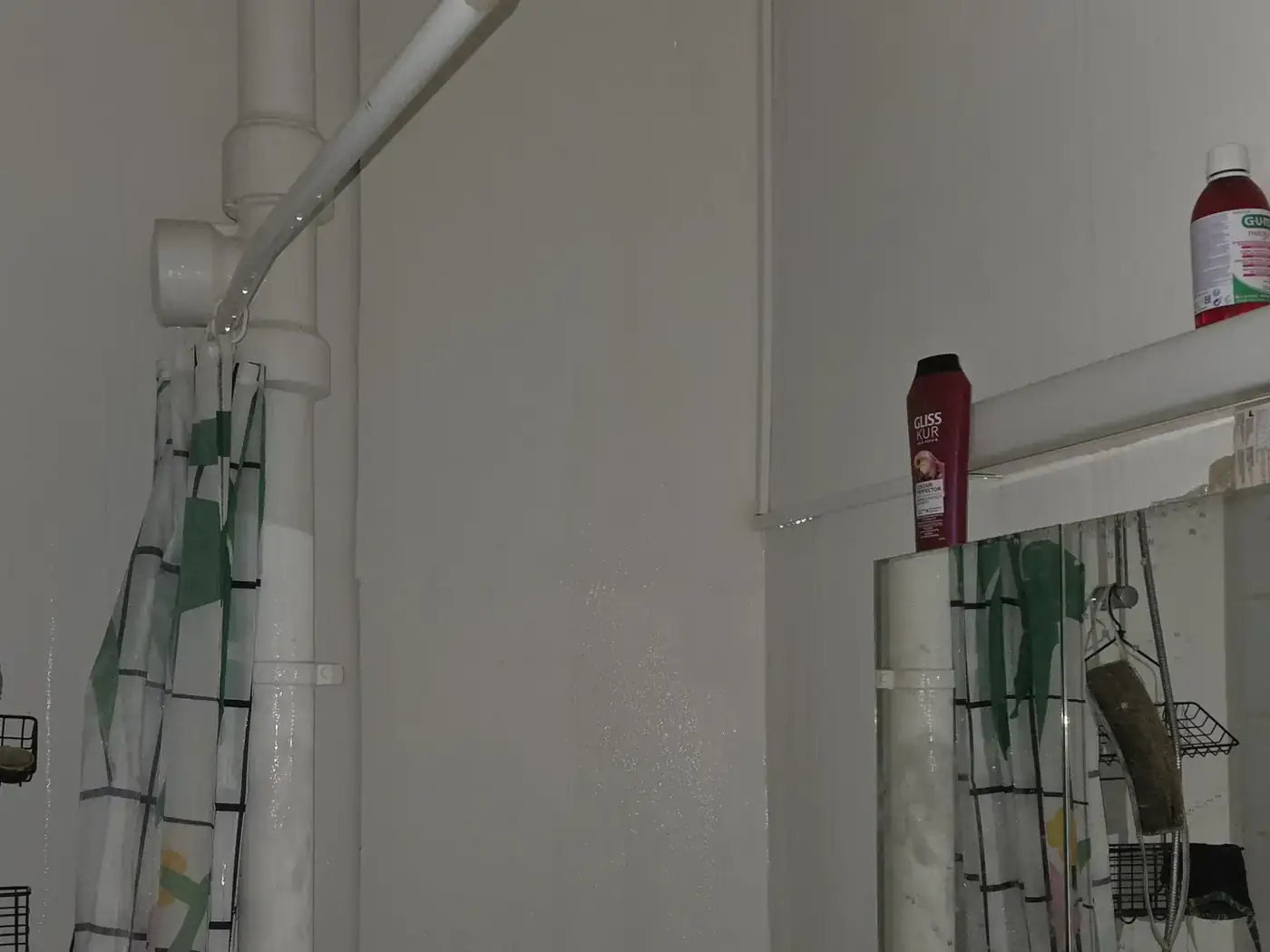
A burst pipe is all it takes: a few hours later the whole room is affected, walls included.
December 2025, avenue Gouverneur Bovesse, Jambes. A public administration suffers water damage in a wing of offices. We are called in, and the insurer covers the job. What follows is not a reconstruction: every time given is read from the timestamps on the photos taken that day.
We arrived at 15:54 and left at 19:45 — three hours and fifty-one minutes, with two people. The timing was no accident. In a public administration, the real cost of water damage is not the cleaning: it is the service grinding to a halt. An office wing closed for three days means dozens of staff relocated, appointments postponed and post piling up.
By starting late in the afternoon, we work in empty premises without disturbing anyone, and the offices reopen the next morning. That was the only thing we were asked for, and it is what we committed to.
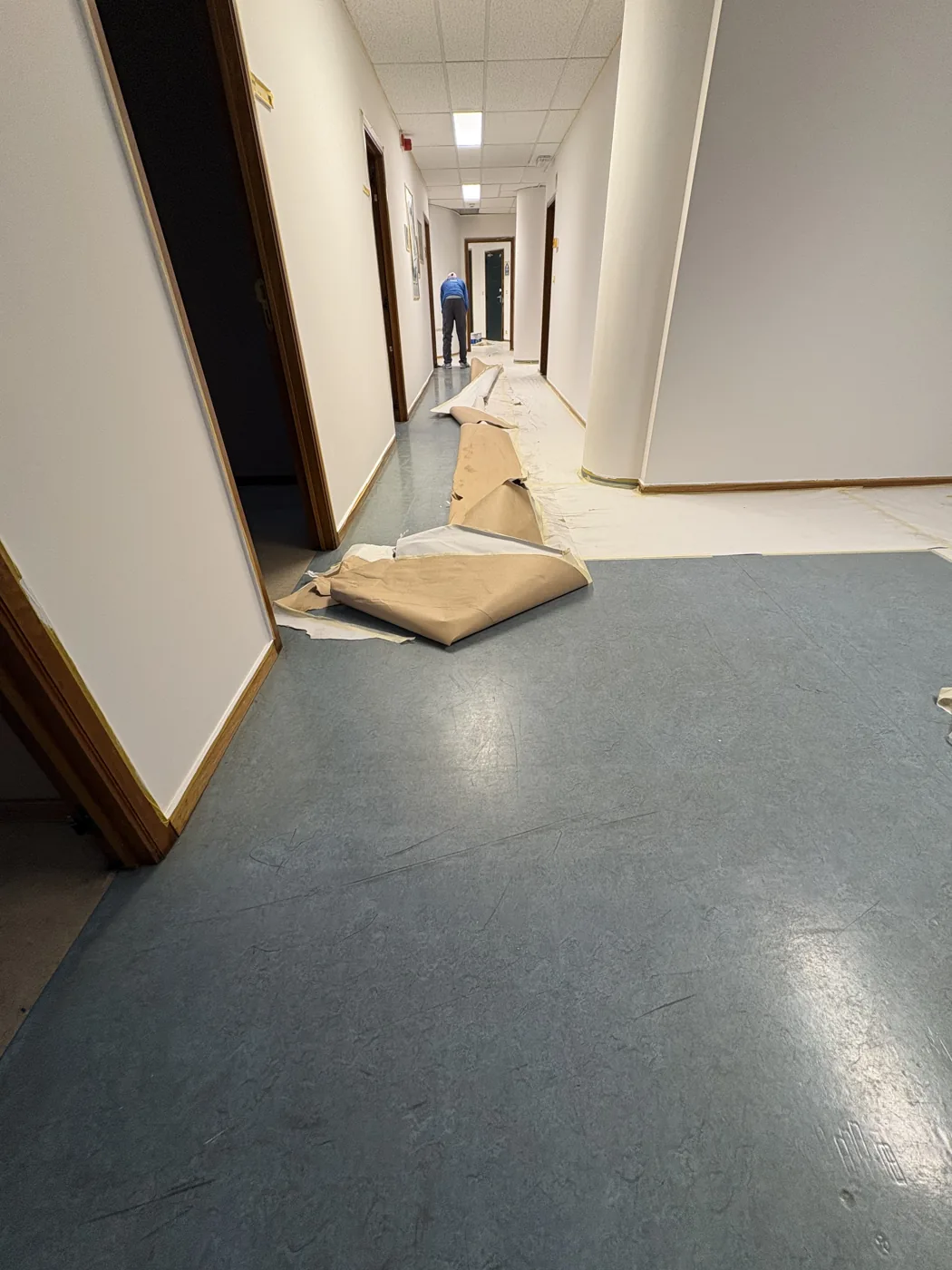
The resilient flooring has soaked up the water and will not dry. The kraft paper is already rolled out: everything leaving the room goes over it, so that no wet adhesive is tracked through the rest of the building.
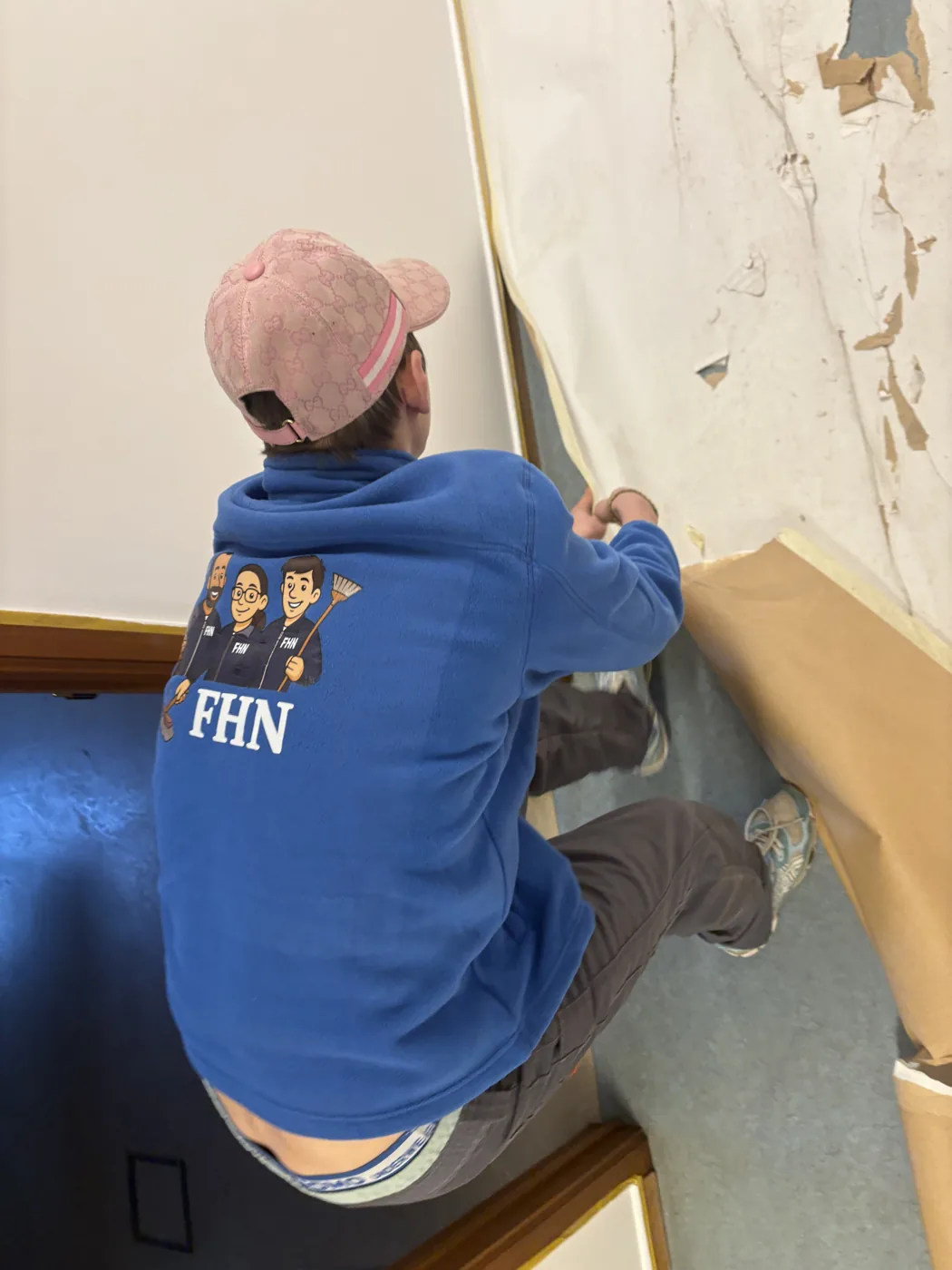
We peel it off by hand, in strips, starting from a corner. Waterlogged flooring tears if you pull it: it has to be lifted, not ripped up.
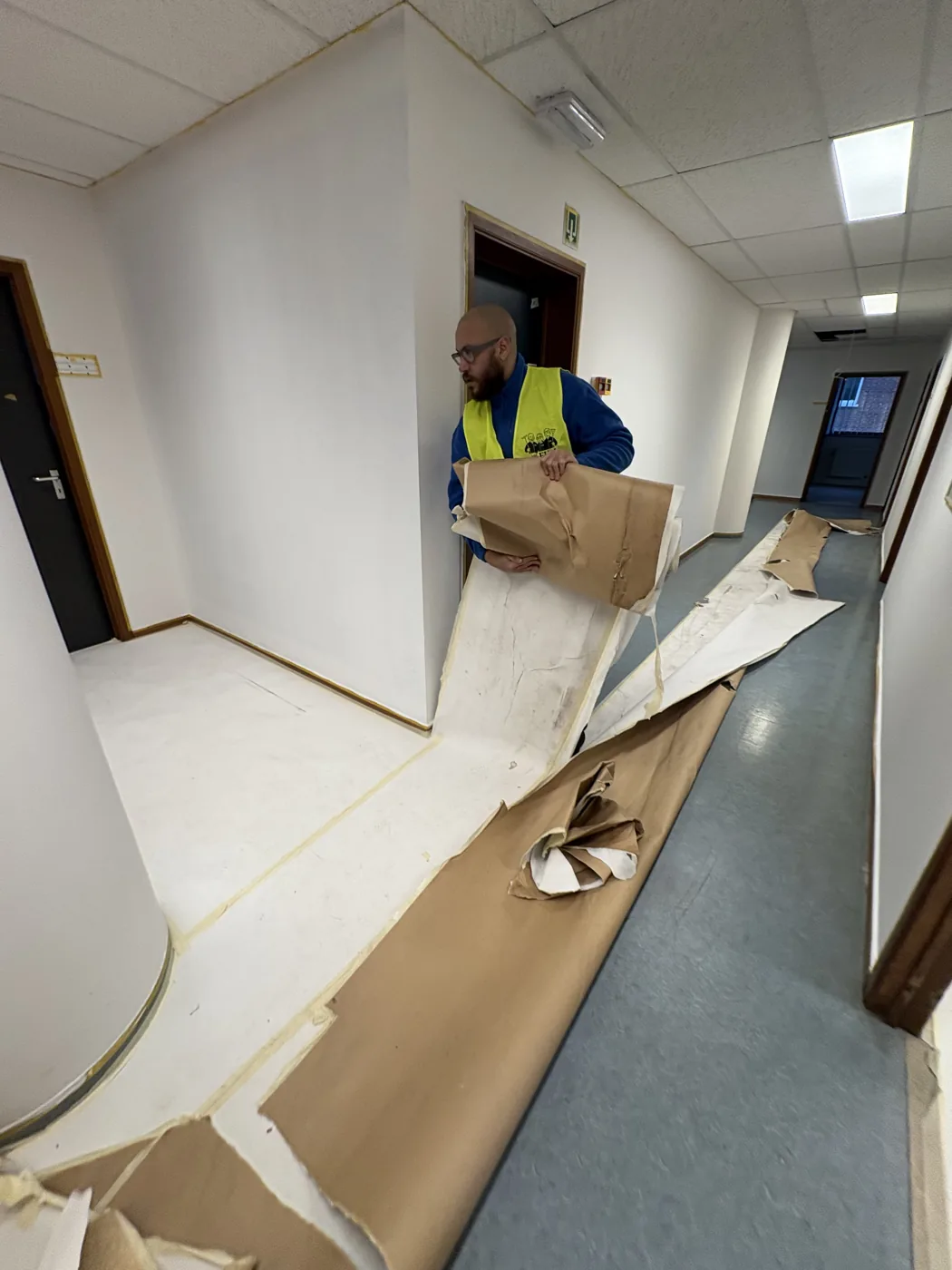
Rolled up tightly on the spot. Wet flooring weighs three to four times its dry weight: it goes out immediately, or it re-wets what has just been done.
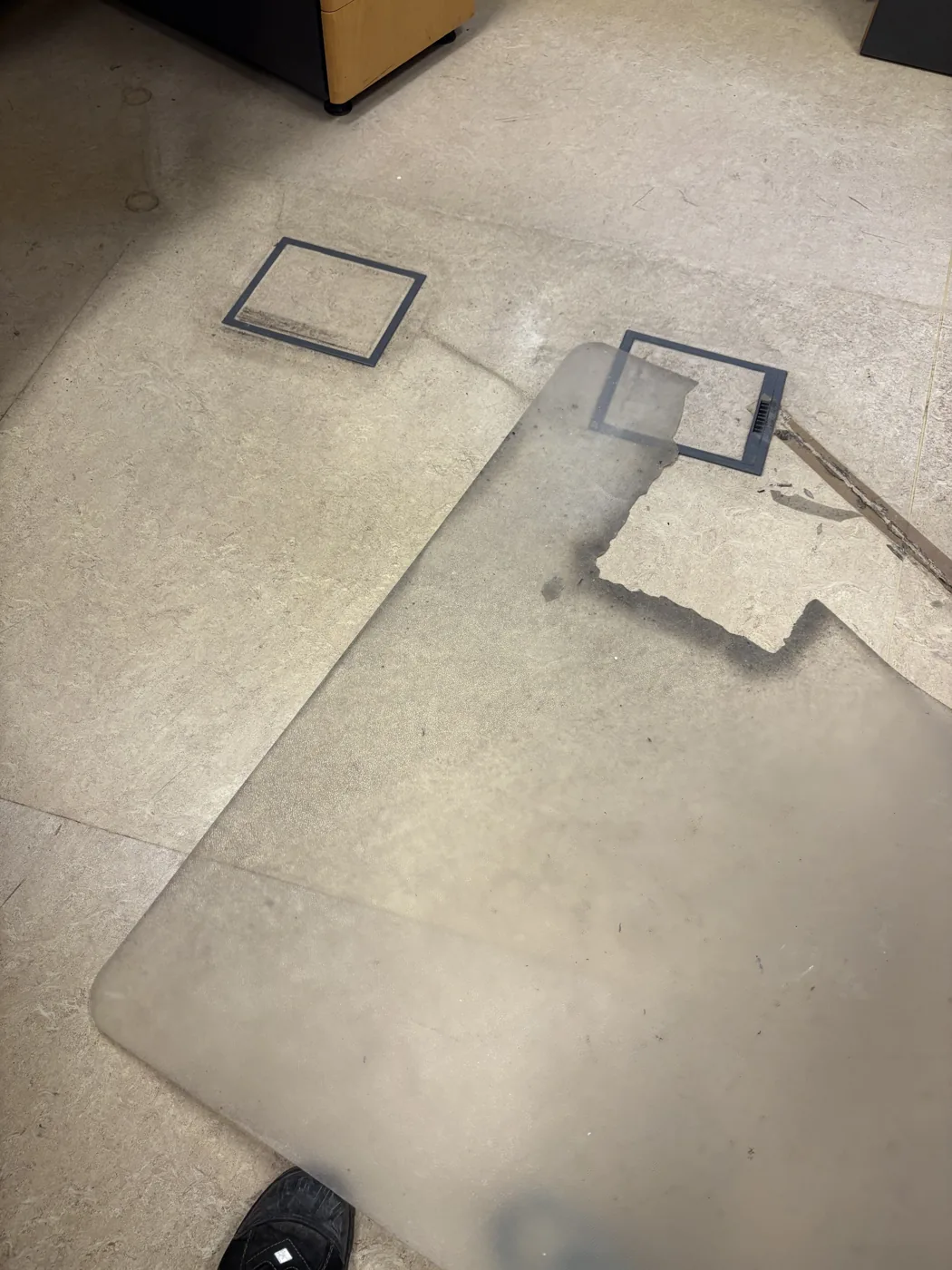
Underneath, the building’s floor, intact, with its patches of blackened adhesive. This is where the next step is decided: a sound substrate gets washed, a damaged one gets reported to the insurer.
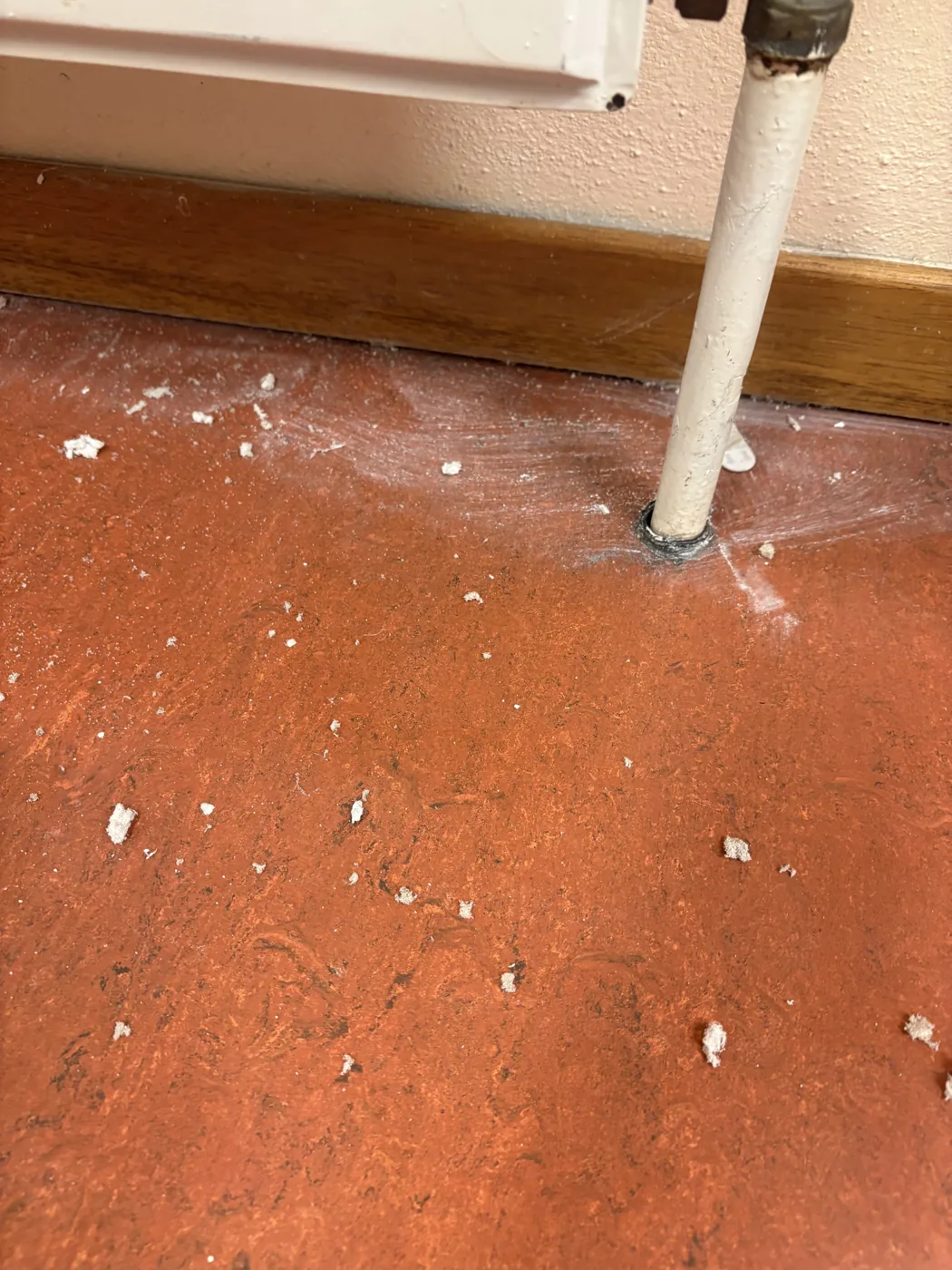
Scraping done, plaster and adhesive debris on the floor. The photo serves a purpose: it shows the insurer what was removed, and from where.
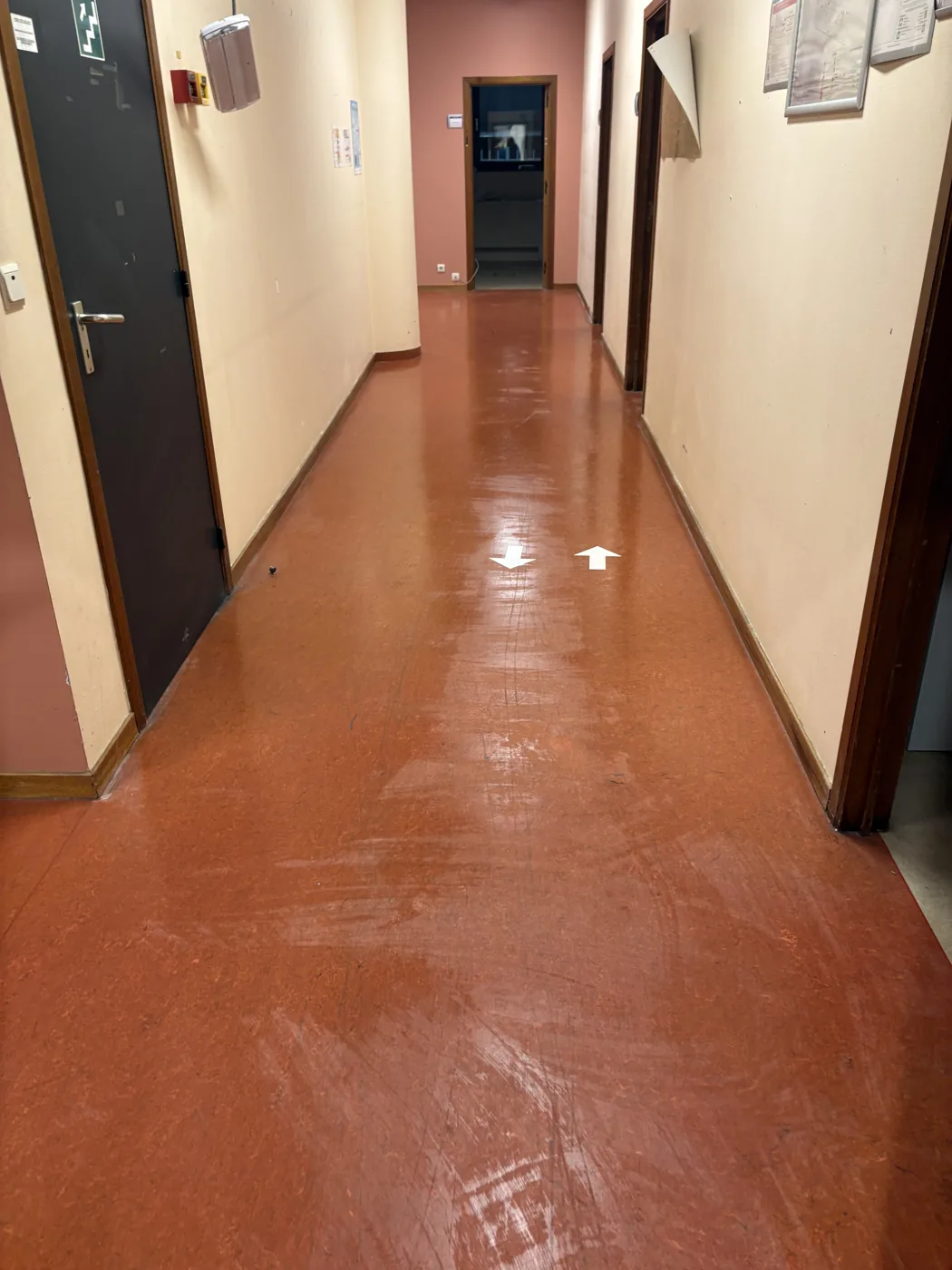
Forty-three minutes later. Scraped, rinsed, washed. The original tiles show through again — the current staff had never seen them.
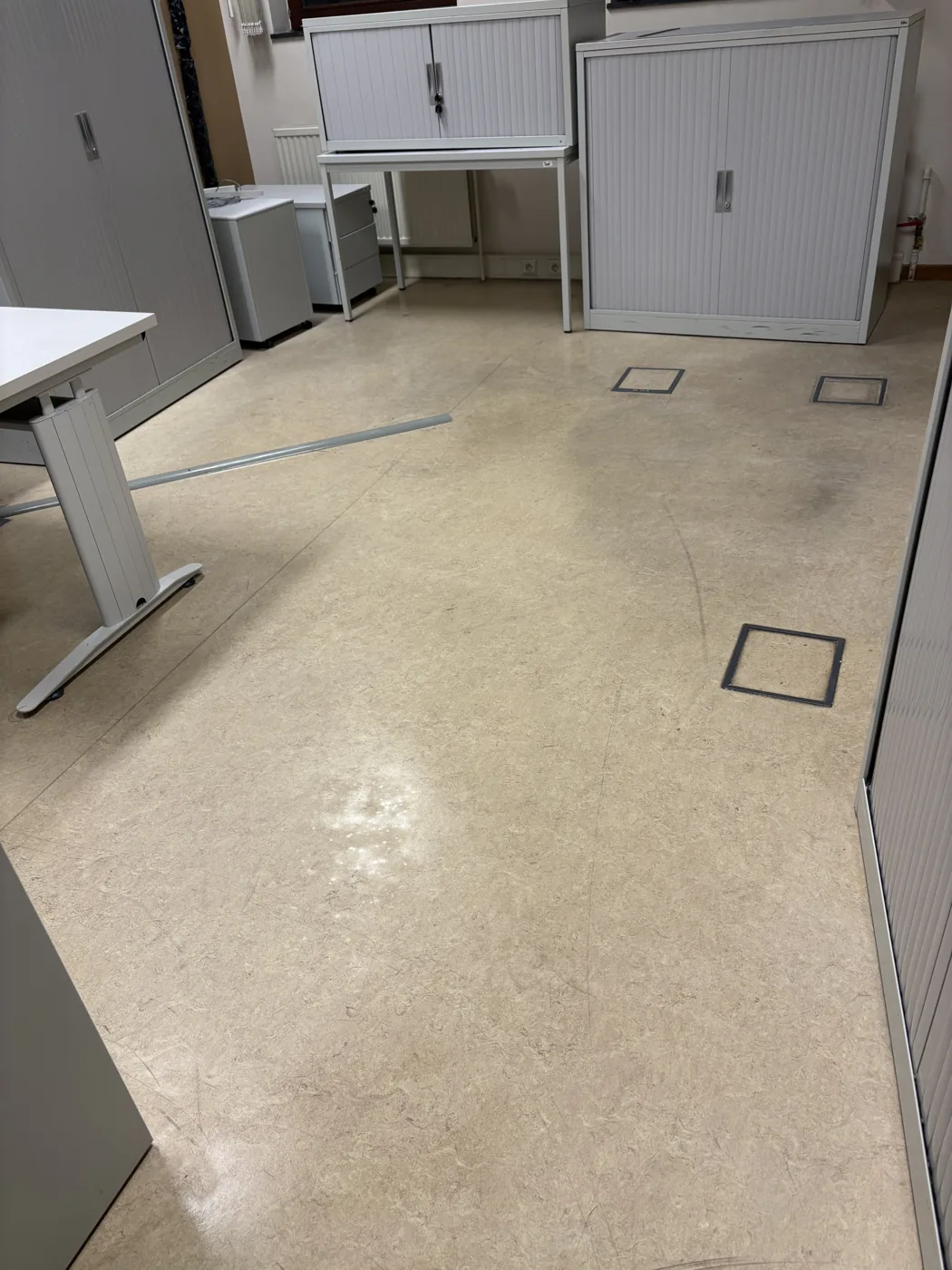
Furniture put back where it was. The next morning, staff came back to their offices: nobody lost a day’s work.
It’s the question we are asked every time, and the answer costs money: glued-down resilient flooring does not dry. Water gets in at the joints, seeps between the adhesive and the substrate, and has no way back out. The surface looks dry within two days; underneath, the adhesive stays damp for weeks. Three to six weeks later, the smell returns, the sheets blister at the seams, and everything has to be redone — this time with the furniture back in place and staff in the offices.
Drying it is cheaper once. Removing it is cheaper twice. On this job, the decision was made on arrival, before anything was touched, and it was justified to the insurer.
Water damage is not something to treat by guesswork. Here is what we apply:
On a covered claim, the paperwork determines the payout as much as the work itself. What we hand over:
The tip that will gain you the most: photograph everything before anyone touches anything — you, a neighbour, a plumber. Nobody can retake those photos afterwards, and they are the first thing the loss adjuster will ask for.
For a comparable office wing — corridor and offices, resilient flooring to lift, floor washed and premises handed back — expect one evening for two people, not a week of contractor time. What changes the bill is neither the floor area nor the difficulty: it is the volume to be removed and the number of rooms to be emptied before we can start. A furnished floor has to be cleared before it can be cleaned.
We price the job after seeing it, and we commit to the condition of the premises at handover — not to a number of hours.
Better to say it before than after: our trade is cleaning and drying out, not plumbing or loss assessment.
We are not plumbers. We pump, clean, dry and disinfect — repairing the pipe or the roof is a job for another trade, to be called in at the same time.
We give you the documents: time-stamped before/after photos and a description of the work carried out. The claim and the negotiation with the insurer remain in your hands or those of your broker.
Pumping takes hours; drying takes days or even weeks, depending on the materials. Be wary of anyone who promises you a dry screed the next day: it is physically impossible.
Each town has its own dedicated page. Our teams set off from Mons and Charleroi to every province of Wallonia.
What costs money after a flood is not the water you can see — it is the moisture that stays in the materials. Between a same-day call-out and one three days later, the difference is counted in mould, odours and floor coverings to replace.
Electrical hazard check, photographic record room by room. These photos belong to you and support your claim with your insurer.
Pumping and wet-vacuuming of floors, corners and underlays. We work from the driest area towards the wettest so as not to spread the affected zone.
Ventilation and dehumidification, for as long as it takes. It is the step everyone wants to shorten, and it is the one that decides what comes next.
Especially if the water comes from a sewer or a flood: it is not clean. Surface disinfection, odour treatment, removal of anything that is lost.
| Material | As a rule |
|---|---|
| Tiles, concrete | Can be saved, after drying and disinfection |
| Glued vinyl or lino flooring | Has to come up: the water stays trapped under the glue |
| Solid wood flooring | Sometimes, if action is taken very quickly |
| Laminate, chipboard, MDF | Rarely — the board swells and does not go back down |
| Skirting boards, lower part of plasterboard partitions | To be cut out to the height affected |
| Soaked mattresses, fabrics, insulation | To be removed, especially after contaminated water |
Notify your insurer as soon as possible — most policies set a short deadline for reporting a claim. You don’t have to wait for the loss adjuster’s visit to have the water removed: on the contrary, policies require you to limit the damage. What matters is keeping the evidence: photos before any work, a detailed quote, and the removed items kept available where possible.
Our quotes and reports are written to be passed on to an insurer as they are: separate line items, dates, time-stamped photos.
Every hour counts. We answer straight away and tell you honestly whether we can be there the same day.